A real-time hand gesture recognition system designed to control video game characters using computer vision and deep learning. This project is part of the course Artificial Intelligence for Interactive Media - TNM114.
Overview
This system uses trained convolutional neural networks to identify hand gestures from a webcam feed. The recognized gestures are sent to a Godot game engine to control a swarm of characters in real-time, creating an intuitive gesture-based game controller.
The project combines:
- Python Backend - OpenCV and TensorFlow for real-time gesture recognition
- Godot Frontend - Game engine that listens for gesture inputs via WebSocket and controls character swarms accordingly
System Architecture
Python Component
- Real-time hand detection using MediaPipe
- CNN-based gesture classification trained on the HagRID dataset
- Two approaches:
- Landmark-based: Uses hand skeleton coordinates for fast inference
- Image-based: Uses 64×64 hand region images for higher accuracy
- WebSocket communication to send recognized gestures to Godot
Godot Component
- Listens for gesture inputs from Python via WebSocket
- Interprets gestures as game commands
- Controls character swarm behavior based on recognized gestures
Dataset
The project uses the HagRID (Hand Gesture Recognition Image Dataset) for training, along with a self-collected dataset of eleven distinct gestures captured directly via webcam. The data is preprocessed and organized into labeled gesture classes stored in:
c:\Project\TNM114\HagridCNN\hagrid_data\processed_images
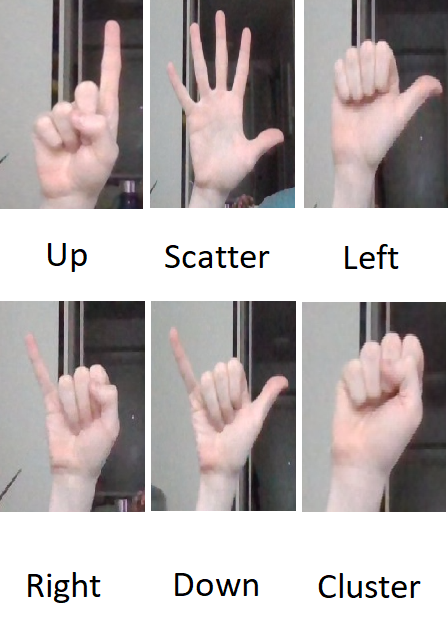 A subset of the self-made dataset: eleven distinct gestures recorded and labelled for training.
Models
- hand_gesture_landmarks.keras - Landmark-based model (fast, real-time)
- hand_gesture_cnn.keras - CNN image-based model (higher accuracy)
Results
Both approaches were trained and evaluated on held-out validation data. The figures below summarize their performance.
 CNN training curves: accuracy and loss across epochs for the image-based model.
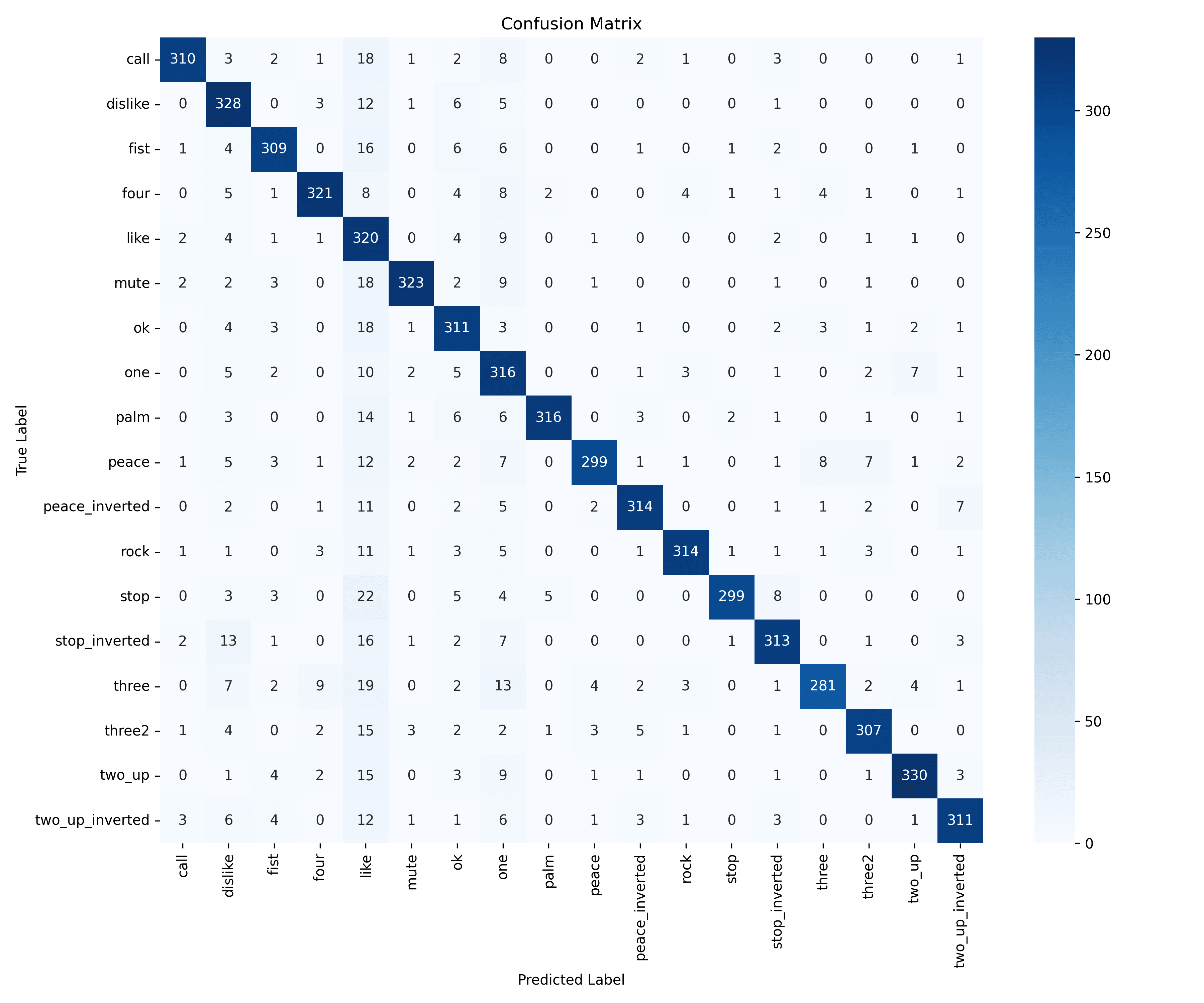
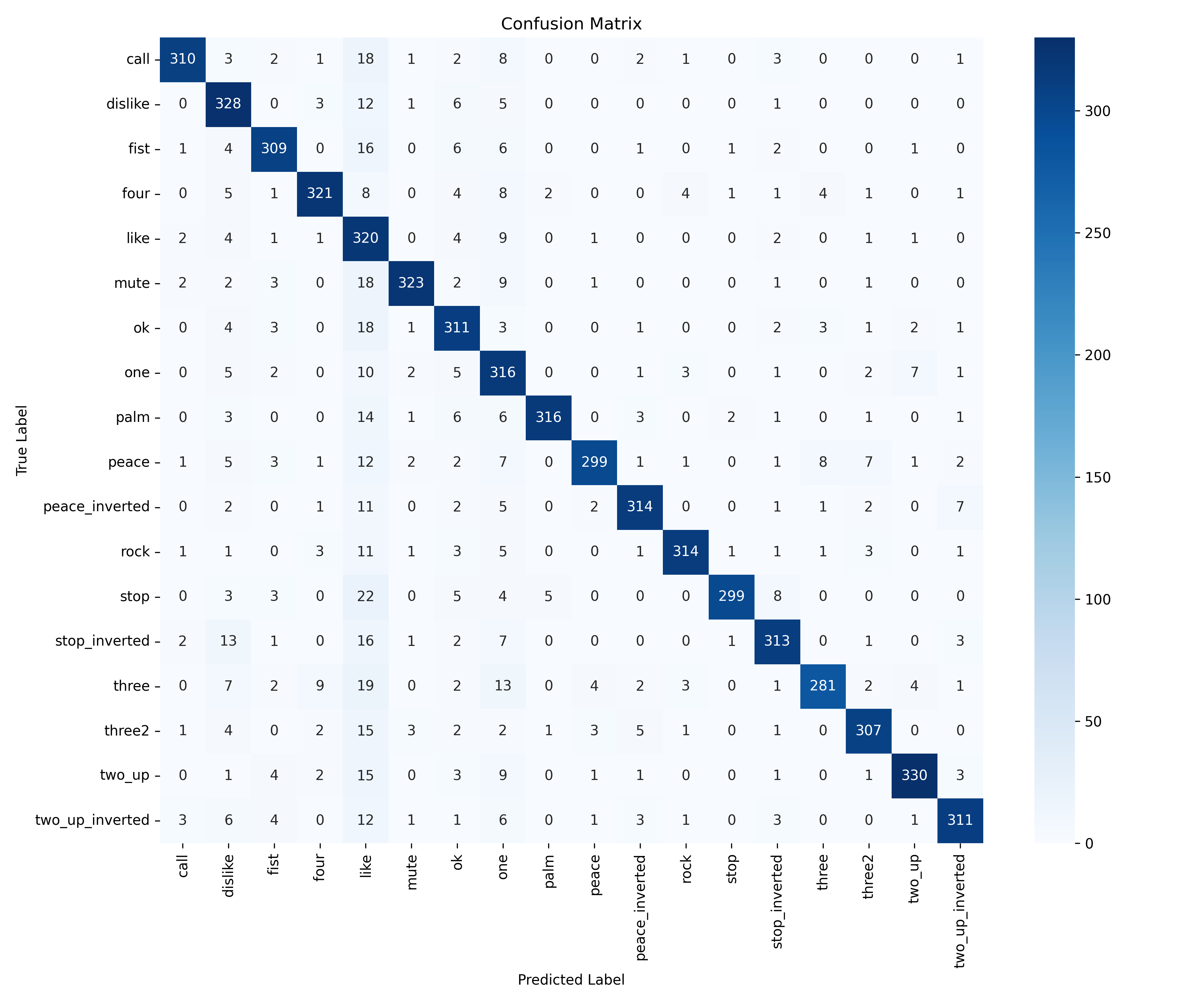 Confusion matrix for the CNN image-based classifier.
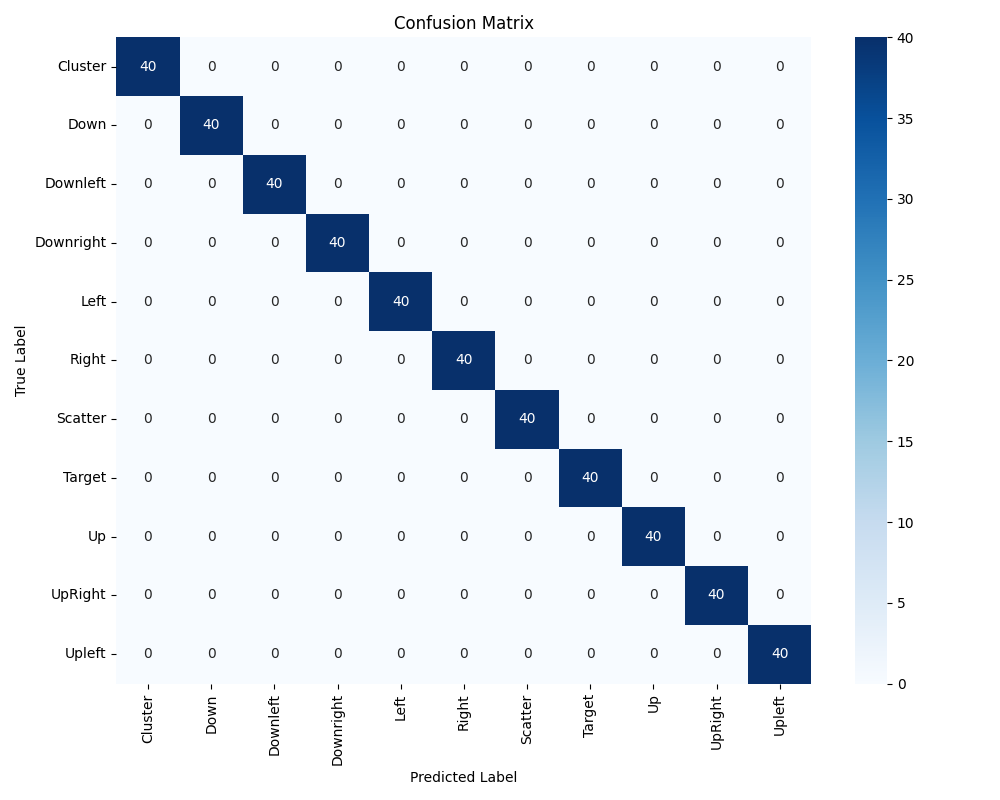 Confusion matrix for the landmark-based classifier, which reached 100% validation accuracy with sub-second per-epoch training.
Usage
Training the Model
python model_trainer.py
Running Gesture Recognition Demos
Two demo scripts illustrate the different recognition approaches:
python speaker_demo.py  # Landmark-based approach with visual feedback
python speaker_cnn.py   # CNN image-based approach with higher accuracy
Both demos display real-time gesture recognition from your webcam and show the predicted gesture with confidence score.
Playing the Game with Gesture Control
To use the full gesture-controlled game:
- Launch the Godot game engine and run the game project
- In a separate terminal, run the Python gesture recognition script:
python speaker.py # Connects to the Godot game via WebSocket
The Python script will connect to the Godot game via WebSocket, sending recognized hand gestures in real-time. These gestures control the swarm of characters in the game, allowing you to steer them intuitively using hand movements captured from your webcam.
Requirements
- Python 3.8+
- TensorFlow/Keras
- OpenCV
- MediaPipe
- NumPy
- Godot Engine 4.x (for game integration)